

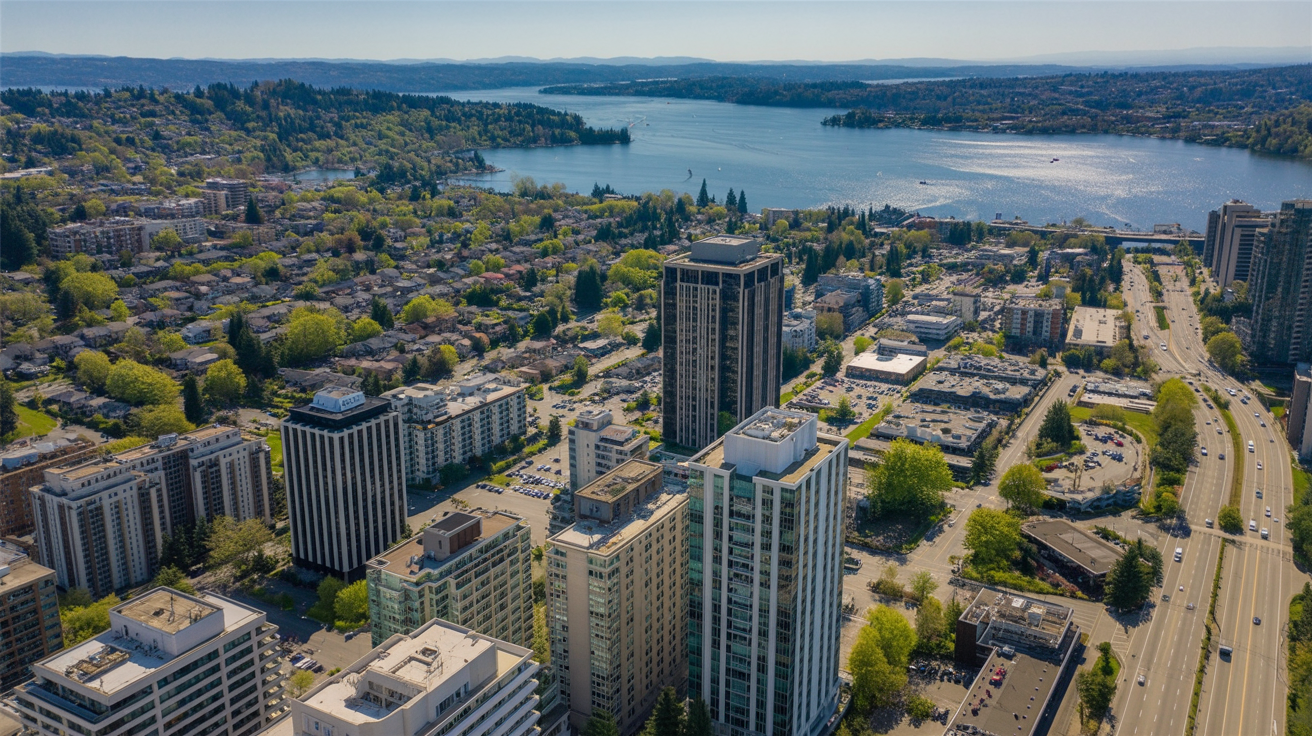
King County Real Estate Market: 2025 Guide for Tech Professionals
King County remains the epicenter of the Pacific Northwest's tech industry and real estate market, home to Amazon, Microsoft, and hundreds of other technology companies. With a median home price of $898,500 as of December 2025—up 2.7% year-over-year—the county presents both opportunities and challenges for tech professionals looking to establish roots in the region.
The current market is characterized by what analysts call a "split market" phenomenon: homes priced below $675,000 are experiencing slower sales velocity, while properties above this threshold are moving quickly, often with multiple offers. For tech professionals with competitive salaries and equity compensation, understanding these dynamics is essential for making strategic real estate decisions.
This comprehensive guide analyzes King County's 2025 real estate landscape through the lens of tech worker priorities: commute times, neighborhood amenities, investment potential, and lifestyle considerations that matter most to software engineers, product managers, data scientists, and other technology professionals.
Current King County Market Overview
King County's real estate market has evolved significantly from the frenzied conditions of 2021-2022. Today's market offers more balanced conditions with increased inventory and reasonable negotiating opportunities, particularly for well-qualified buyers.
Key Market Metrics (December 2025)
| Metric | Current Value | Year-Over-Year Change |
| Median Home Price | $898,500 | +2.7% |
| Average Days on Market | 24 days | Stable |
| Inventory Levels | 3.04 months | +25.64% |
| Mortgage Rates (30-year fixed) | 6.0-6.39% | Down from 7%+ in 2023 |
| Price per Square Foot | ~$475 | +1.8% |
The Split Market Phenomenon
The most significant trend in King County is the divergence between price segments. Homes priced below $675,000—typically condos, townhomes, or smaller single-family homes in less central locations—are experiencing softer demand. These properties average 35-45 days on market and often sell below asking price.
Conversely, homes above $675,000, particularly those in desirable neighborhoods near tech employment centers, are selling in an average of 15-20 days, frequently with multiple offers. This segment includes most single-family homes in Bellevue, Redmond, Kirkland, and desirable Seattle neighborhoods.
For tech professionals, this split creates strategic opportunities. If you're targeting the sub-$675,000 segment—perhaps a condo or townhome as a first purchase—you have negotiating leverage. If you're pursuing higher-priced properties, expect competition and prepare accordingly.
Inventory Trends
The 25.64% year-over-year increase in inventory represents a significant shift from recent years. With 3.04 months of inventory, King County has moved from a severe seller's market to more balanced conditions. A "balanced" market typically has 4-6 months of inventory, so we're approaching equilibrium.
This increased inventory benefits buyers by:
- Providing more choices and time to make decisions
- Reducing the frequency of bidding wars
- Creating opportunities to negotiate on price, repairs, and terms
- Allowing for more thorough due diligence without pressure
Mortgage Rate Impact
Current mortgage rates between 6.0-6.39% for 30-year fixed loans represent a significant improvement from the 7%+ rates seen in 2023. For a $720,000 loan (80% of the median price), the difference between 7% and 6.2% is approximately $350 per month—$4,200 annually.
However, rates remain elevated compared to the 3-4% range of 2020-2021. This reality means affordability remains a challenge, but for tech professionals with strong incomes and equity compensation, the current environment is manageable with proper planning.
Neighborhood Analysis for Tech Professionals
King County encompasses diverse neighborhoods, each offering distinct advantages for tech workers. Your ideal location depends on your employer, lifestyle preferences, and long-term goals.
Bellevue: The Eastside Tech Hub
Bellevue has transformed from a suburban satellite city to a major tech employment center, with Amazon, Microsoft, Meta, Google, and numerous other companies maintaining significant presences.
Median Home Price: $1,250,000 for single-family homes; $650,000-$850,000 for condos
Key Advantages:
- Walking or short commute to major tech employers
- Excellent schools (Bellevue School District consistently ranks among Washington's best)
- Urban amenities with suburban feel
- Strong appreciation potential due to continued corporate expansion
- Diverse dining and shopping, including Bellevue Square and Lincoln Square
- Access to parks, trails, and waterfront
Considerations:
- Premium pricing, especially in neighborhoods like Bridle Trails, Clyde Hill, and Medina
- Increasing density with new high-rise development
- Traffic congestion during peak hours
Best for: Tech professionals working on the Eastside who prioritize walkability, amenities, and minimal commute time. Ideal for those with substantial equity compensation or dual tech incomes.
Redmond: Microsoft's Backyard
Redmond's identity is inseparable from Microsoft, though the city has diversified with Nintendo, SpaceX, and other tech companies establishing operations here.
Median Home Price: $1,150,000 for single-family homes; $550,000-$750,000 for condos
Key Advantages:
- Immediate proximity to Microsoft's main campus
- Excellent schools and family-friendly environment
- Extensive trail systems, including the Sammamish River Trail
- Downtown Redmond revitalization with new restaurants and entertainment
- Strong sense of community
- Easy access to outdoor recreation (Marymoor Park, nearby mountains)
Considerations:
- Less urban density than Seattle or Bellevue
- Limited nightlife and cultural options compared to Seattle
- SR-520 tolls for westbound commutes to Seattle
Best for: Microsoft employees, families prioritizing schools and outdoor access, and those seeking a suburban lifestyle with tech industry proximity.
Seattle Neighborhoods: Urban Living
Seattle proper offers diverse neighborhoods catering to different lifestyles and budgets. Here are key areas for tech professionals:
Capitol Hill
Median Home Price: $850,000 for condos/townhomes; $1,100,000+ for single-family homes
Capitol Hill combines urban energy with residential charm. Known for its LGBTQ+ friendly culture, diverse dining scene, and nightlife, it attracts younger tech professionals who prioritize walkability and cultural amenities. Light rail access provides easy commutes to downtown Seattle and eventually to Bellevue and Redmond.
Fremont and Wallingford
Median Home Price: $950,000-$1,200,000
These adjacent neighborhoods offer a "village within the city" feel with local businesses, parks, and strong community identity. Google's Fremont office and proximity to the University of Washington make these areas popular with tech workers. Excellent walkability and bike infrastructure appeal to those seeking car-free or car-light lifestyles.
Ballard
Median Home Price: $900,000-$1,150,000
Ballard has evolved from a Scandinavian fishing village to a trendy neighborhood with craft breweries, restaurants, and the popular Ballard Farmers Market. The neighborhood attracts tech professionals who want urban amenities with a neighborhood feel. New condo developments offer more affordable entry points ($500,000-$700,000).
Queen Anne
Median Home Price: $1,000,000-$1,400,000
Divided into Lower Queen Anne (urban, near Seattle Center) and Upper Queen Anne (residential, with stunning views), this neighborhood offers proximity to downtown Seattle and Amazon's headquarters. Lower Queen Anne provides walkable urban living, while Upper Queen Anne offers quieter residential streets with panoramic views of Puget Sound and the Olympics.
West Seattle
Median Home Price: $850,000-$1,050,000
West Seattle offers a more relaxed, beach-town vibe while remaining within Seattle city limits. Alki Beach, Lincoln Park, and numerous local businesses create a strong community feel. The West Seattle Bridge provides access to downtown and SODO, though traffic can be challenging during peak hours. This area appeals to tech professionals seeking more space and a neighborhood feel at relatively lower prices than central Seattle.
Kirkland: Waterfront Living
Median Home Price: $1,300,000 for single-family homes; $600,000-$800,000 for condos
Key Advantages:
- Charming downtown with waterfront parks and beaches
- Excellent restaurants and boutique shopping
- Strong schools and family-friendly environment
- Easy access to both Seattle and Eastside employment centers
- Active community with numerous events and festivals
- Google's Kirkland office provides local tech employment
Considerations:
- Premium pricing, especially for waterfront properties
- Limited inventory in desirable areas
- Commute to Seattle requires crossing Lake Washington (SR-520 or I-90)
Best for: Tech professionals who want a balance of urban amenities and waterfront lifestyle, families prioritizing schools and community, and those working at Eastside companies with flexibility for a slightly longer commute.
Commute Time Comparison
| Neighborhood | To Microsoft (Redmond) | To Amazon (Seattle) | To Meta (Bellevue) |
| Bellevue | 15-20 min | 20-30 min | 5-10 min |
| Redmond | 5-10 min | 25-35 min | 15-20 min |
| Capitol Hill | 30-40 min | 10-15 min | 25-35 min |
| Fremont | 25-35 min | 15-20 min | 20-30 min |
| Ballard | 35-45 min | 20-25 min | 30-40 min |
| Queen Anne | 30-40 min | 10-15 min | 25-35 min |
| West Seattle | 40-50 min | 20-30 min | 35-45 min |
| Kirkland | 15-25 min | 25-35 min | 10-15 min |
Note: Times reflect typical morning commute conditions. Actual times vary based on specific locations, traffic, and time of day.
Price Trends and Forecasts
Understanding where King County's market is headed helps inform your buying decision and timing strategy.
Recent Price Trajectory
King County's 2.7% year-over-year price increase represents a return to more sustainable appreciation after the dramatic gains of 2020-2022. During that period, prices increased 15-25% annually, driven by record-low interest rates, limited inventory, and pandemic-driven demand.
The current modest appreciation reflects:
- Higher mortgage rates reducing buyer purchasing power
- Increased inventory providing more options
- Economic uncertainty affecting buyer confidence
- Continued strong employment in tech sector supporting demand
2025-2026 Outlook
Most analysts project King County home prices to appreciate 3-5% annually over the next 18-24 months, driven by:
- Strong tech employment: Continued hiring at major employers supports housing demand
- Limited new construction: High building costs and regulatory constraints limit supply growth
- Population growth: The Seattle metro area continues attracting domestic and international migrants
- Potential rate decreases: If mortgage rates decline to 5.5-5.75%, buyer demand will increase
- Infrastructure investment: Light rail expansion and transit improvements enhance neighborhood desirability
However, risks to this outlook include:
- Tech industry layoffs or hiring slowdowns
- Economic recession reducing buyer confidence
- Sustained high interest rates
- Increased remote work reducing need for proximity to offices
Long-Term Investment Perspective
Historically, King County real estate has been an excellent long-term investment. Over the past 20 years, median home prices have increased approximately 6-7% annually, significantly outpacing inflation and most other investment vehicles when accounting for leverage and tax benefits.
For tech professionals planning to stay in the region for 5+ years, current market conditions present a reasonable entry point. While prices may fluctuate in the short term, the region's strong economic fundamentals, limited geography (water and mountains constrain expansion), and continued population growth support long-term appreciation.
Making Competitive Offers in King County
Successfully navigating King County's split market requires understanding how to craft competitive offers while protecting your interests.
Offer Strategy by Price Segment
Under $675,000 (Condos, Townhomes, Smaller Homes):
In this segment, buyers have more leverage. Consider these strategies:
- Offer 2-5% below asking price for properties on market 30+ days
- Request seller-paid closing costs (1-2% of purchase price)
- Include standard contingencies without concern about losing to competing offers
- Take time for thorough inspections and due diligence
- Negotiate repairs or credits based on inspection findings
$675,000-$1,000,000 (Most Single-Family Homes):
This segment sees moderate competition. Balanced approach recommended:
- Offer at or slightly above asking price for well-priced properties
- Include standard contingencies but with shorter timelines (7-10 days for inspection)
- Demonstrate financial strength with larger earnest money (2-3% of purchase price)
- Be flexible on closing timeline to accommodate seller needs
- Consider escalation clauses with caps 3-5% above asking price
Above $1,000,000 (Premium Properties):
Expect strong competition for desirable properties. Aggressive strategies needed:
- Offer above asking price for newly listed, desirable properties
- Use escalation clauses with meaningful increments ($5,000-$10,000)
- Shorten contingency periods (5-7 days for inspection)
- Consider appraisal gap coverage (commit to covering $20,000-$50,000 if appraisal is low)
- Maximize earnest money to demonstrate commitment
- Pre-inspect properties before making offers to potentially waive inspection contingency
Leveraging Your Tech Professional Status
Your employment in the tech sector can strengthen your offer:
- Strong income documentation: Tech salaries and equity compensation demonstrate financial stability
- Large down payments: Vested RSUs can fund substantial down payments, reducing financing risk
- Quick closings: Strong financial position allows for faster closing timelines
- Cash offers: Some tech professionals leverage securities-backed lines of credit for cash offers, then refinance after closing
Common Mistakes to Avoid
Even experienced tech professionals make these offer mistakes:
- Overextending financially: Just because you qualify for $1.2 million doesn't mean you should spend it—maintain lifestyle flexibility
- Waiving all contingencies: Inspection and financing contingencies protect you from catastrophic mistakes
- Ignoring resale potential: Consider future buyers' preferences, not just your own
- Emotional decision-making: Falling in love with a property clouds judgment—stay analytical
- Neglecting total cost of ownership: HOA fees, property taxes, and maintenance add significantly to monthly costs
Understanding the Closing Process
Once your offer is accepted, the closing process typically takes 30-45 days in King County. Understanding each phase helps you navigate smoothly to ownership.
Timeline Overview
Days 1-3: Opening Escrow
- Escrow company opens file and orders title report
- You deposit earnest money (typically 1-3% of purchase price)
- Lender begins formal loan processing
- Schedule home inspection
Days 4-10: Inspection Period
- Complete home inspection and any specialized inspections
- Review inspection reports and identify concerns
- Negotiate repairs or credits with seller
- Remove inspection contingency or renegotiate/cancel contract
Days 10-20: Appraisal and Loan Processing
- Lender orders appraisal
- Appraiser evaluates property (typically takes 7-10 days)
- Lender reviews appraisal and continues loan processing
- Provide any additional documentation lender requests
- Remove appraisal contingency or renegotiate if appraisal is low
Days 20-30: Final Loan Approval
- Lender completes underwriting
- Final employment and asset verification
- Secure homeowners insurance policy
- Review preliminary closing disclosure
- Remove financing contingency
Days 30-45: Closing Preparation
- Receive final closing disclosure (at least 3 days before closing)
- Complete final walkthrough (24-48 hours before closing)
- Wire down payment and closing costs to escrow
- Review and sign closing documents
- Deed records with King County
- Receive keys and take possession
King County-Specific Considerations
Excise Tax: Washington has no state income tax but charges real estate excise tax on sales. As a buyer, you don't pay this directly, but it affects seller proceeds and may influence negotiations. The current rate is 1.78% for King County (1.28% state + 0.5% county).
Property Taxes: King County property taxes average 0.92% of assessed value annually, though rates vary by specific location and local levies. Your lender will establish an escrow account to pay these taxes, typically collecting 1/12 of the annual amount with each mortgage payment.
Title Insurance: Washington is a title insurance state, and rates are regulated. Budget approximately $1,000-$2,000 for owner's title insurance on a median-priced home. This one-time premium protects you from title defects, liens, or ownership disputes.
Closing Costs Breakdown
Expect total closing costs of 2-5% of purchase price. On an $898,500 home, that's $17,970-$44,925. Typical costs include:
- Loan origination fee: 0.5-1% of loan amount
- Appraisal: $500-$700
- Credit report: $25-$50
- Title insurance: $1,000-$2,000
- Escrow fees: $500-$1,000
- Recording fees: $200-$300
- Prepaid property taxes: Varies by closing date
- Prepaid homeowners insurance: First year premium
- HOA transfer fees: $200-$500 (if applicable)
Investment Perspective
For tech professionals, King County real estate represents more than just housing—it's a significant investment and wealth-building tool.
Building Equity Through Appreciation and Paydown
Real estate builds wealth through two mechanisms: appreciation and mortgage paydown. On an $898,500 home with 20% down ($179,700) and a 6.2% mortgage:
- Year 1: Approximately $12,000 in principal paydown + $26,955 in appreciation (3% growth) = $38,955 equity gain
- Year 5: Cumulative $70,000 in principal paydown + $143,000 in appreciation (3% annually) = $213,000 equity gain
- Year 10: Cumulative $165,000 in principal paydown + $310,000 in appreciation = $475,000 equity gain
This equity can fund future real estate investments, business ventures, or other financial goals.
Tax Benefits
Homeownership provides significant tax advantages:
- Mortgage interest deduction: Deduct interest on loans up to $750,000
- Property tax deduction: Deduct up to $10,000 in state and local taxes (SALT cap)
- Capital gains exclusion: Exclude up to $250,000 (single) or $500,000 (married) in gains when selling primary residence
- Home office deduction: If self-employed or running a side business, deduct home office expenses
For a tech professional in the 32% federal tax bracket, these deductions can save $10,000-$15,000 annually in the early years of a mortgage.
Leverage and Return on Investment
Real estate's power comes from leverage—controlling a large asset with a relatively small down payment. With 20% down ($179,700), you control an $898,500 asset. If the home appreciates 3% annually ($26,955), your return on invested capital is 15% ($26,955 / $179,700), not including principal paydown or tax benefits.
Few investments offer this combination of leverage, tax benefits, and utility (you live in your investment).
Future Investment Opportunities
Many tech professionals use their first home as a stepping stone to building a real estate portfolio. After 3-5 years of appreciation and equity buildup, you might:
- Upgrade to a larger home, converting your first property to a rental
- Use a cash-out refinance to fund investment property down payments
- Leverage home equity for business ventures or other investments
- Relocate for work and rent your King County property, maintaining exposure to the market
Why Choose Odigo Club
Navigating King County's complex real estate market requires expertise, local knowledge, and an agent who understands the unique needs and priorities of tech professionals. Odigo Club specializes in serving software engineers, product managers, data scientists, and other technology workers in the Greater Seattle area.
Our agents live and work in King County, with deep knowledge of neighborhood nuances, commute patterns, and the lifestyle considerations that matter most to tech professionals. We understand equity compensation, hybrid work arrangements, and the financial sophistication of our clients.
What sets Odigo Club apart:
- Data-driven approach: We leverage real-time market data, comparable sales analysis, and predictive analytics to identify opportunities and avoid overpaying
- Tech industry expertise: We understand RSU vesting schedules, equity compensation, and how to structure offers that leverage your financial strengths
- Neighborhood specialization: Our agents specialize in specific King County neighborhoods, providing insider knowledge on schools, amenities, and future development
- Commute optimization: We help you balance home features, price, and commute times to Microsoft, Amazon, Meta, Google, and other major employers
- Negotiation excellence: Our experience in competitive markets helps you craft winning offers while protecting your interests with appropriate contingencies
- Investment perspective: We analyze properties not just as homes but as investments, considering appreciation potential, rental income possibilities, and long-term value
- Tech-forward service: We use modern communication tools, virtual tours, and digital document signing that fit your lifestyle and schedule
- Long-term partnership: We're here for your entire real estate journey, from first condo to dream home to investment properties
Whether you're considering a condo in Capitol Hill, a townhome in Fremont, or a single-family home in Bellevue or Redmond, Odigo Club provides the expertise, market knowledge, and personalized service you need to make confident decisions in King County's dynamic real estate market.
Ready to explore King County real estate? Visit www.odigoclub.com to connect with an agent who specializes in helping tech professionals find their perfect home in the heart of the Pacific Northwest's tech industry. Let's turn your King County real estate goals into reality.
About the Author

Peter Kim
Peter Kim is the owner of Odigo Real Estate Club, a leading real estate agency in the Greater Seattle area that specializes in residential, commercial, and luxury properties. With over 25 years of combined experience and a team of highly skilled agents, Peter brings a wealth of knowledge and expertise to the real estate space.


