

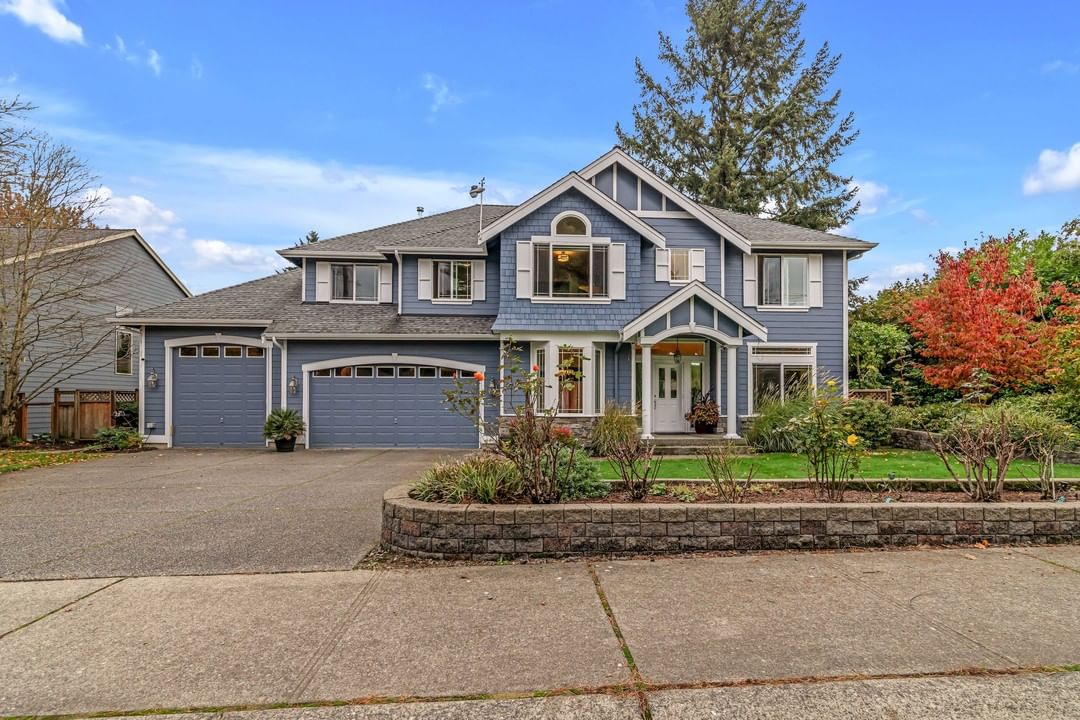
Seattle Real Estate Market 2025: Trends, Prices, and Buying Strategies
Seattle Real Estate Market: The Great Housing Reset of 2025
Seattle's real estate market in 2025 is experiencing what analysts call the "Great Housing Reset"—a fundamental shift from urgency to selectivity that's reshaping how buyers and sellers approach transactions. This isn't a market crash; it's a recalibration toward more sustainable, balanced conditions after years of frenzied activity.
For tech professionals, investors, and families considering Seattle real estate, understanding these new dynamics is essential for making strategic decisions in a market that rewards preparation and patience over speed and speculation.
Current Market Conditions
As of December 2025, Seattle's housing market demonstrates several key characteristics that define the "Great Housing Reset." Inventory levels have reached approximately 3.3 months of market-wide supply, with active listings approaching 3,000 homes across all residential product types. This represents the highest sustained inventory level since before the rate shock of 2022-2023, roughly 40% higher than the previous year and nearly double the levels seen two years prior.
Mortgage rates have stabilized in the low-to-mid 6% range (approximately 6.0-6.5% for 30-year fixed loans), roughly 60-90 basis points below peak levels. This stability has restored buyer confidence, increased pre-approvals, and reactivated the $700K-$1.3M buyer segment that had been sidelined during the rate spike.
Sales activity remains strong, with approximately 38-40% of listings going pending within the first 30 days. However, this represents a shift from the 60-70% rates seen during the pandemic-era frenzy. Homes that are priced correctly and presented well still sell quickly, but those that aren't are sitting longer, forcing price adjustments and negotiations.
Price Trends and Segmentation
Seattle's market shows significant price segmentation by property type and location. For King County overall, the median price for all residential and condo properties in October 2025 was $887,300, representing a 2.58% increase year-over-year. Seattle specifically saw a median price of $899,000, up 2.80%, with Seattle residential-only properties experiencing a significant 7.97% increase to $1,049,999.
This data reveals an important trend: larger, desirable single-family homes are well-insulated from economic pressures, as buyers in this segment are less reliant on fluctuating mortgage rates. Conversely, the condo market—often an entry point for first-time buyers—has seen prices remain relatively flat, highlighting the impact of high interest rates on more affordable segments.
The forecast for the Seattle-Tacoma-Bellevue Metropolitan Statistical Area projects a nearly flat change of +0.1% in home values from October 2025 to October 2026. This suggests a balanced market where affordability has reached its maximum, and while not anticipating a significant drop, it's not expecting major surges either.
Neighborhood Analysis
Capitol Hill and First Hill
These central Seattle neighborhoods continue to attract young professionals and tech workers seeking urban lifestyles. Median condo prices range from $500,000-$800,000, while single-family homes command $1M+. The light rail connection provides easy access to Amazon's headquarters and will eventually connect to Bellevue and Redmond tech campuses. The neighborhoods offer walkability, diverse dining and entertainment, LGBTQ+ friendly culture, and proximity to major employers.
Fremont and Wallingford
These adjacent neighborhoods offer a "village within the city" atmosphere with strong community identity. Median prices range from $900,000-$1,300,000. Google's Fremont office anchors tech employment in the area, and proximity to the University of Washington attracts academic and research professionals. The neighborhoods feature excellent walkability and bike infrastructure, local businesses and farmers markets, and parks and green spaces including Gas Works Park.
Ballard
Ballard has evolved from a Scandinavian fishing village to one of Seattle's trendiest neighborhoods. Median prices range from $900,000-$1,150,000 for single-family homes, with new condo developments offering entry points at $500,000-$700,000. The neighborhood is known for its craft brewery scene, the popular Ballard Farmers Market, waterfront access and maritime heritage, and strong local business community.
Queen Anne
Divided into Lower Queen Anne (urban, near Seattle Center) and Upper Queen Anne (residential, with views), this neighborhood offers diverse living options. Median prices range from $1,000,000-$1,400,000. Lower Queen Anne provides walkable urban living near Amazon headquarters and Seattle Center attractions, while Upper Queen Anne offers quieter residential streets with panoramic views of Puget Sound, the Olympics, and the city skyline.
West Seattle
West Seattle offers a more relaxed, beach-town vibe while remaining within Seattle city limits. Median prices range from $850,000-$1,050,000. The neighborhood features Alki Beach and waterfront access, Lincoln Park and numerous green spaces, strong local business districts in Junction and Admiral, and a community feel distinct from central Seattle. The West Seattle Bridge provides access to downtown and SODO, though traffic can be challenging during peak hours.
The Impact of Hybrid Work
The rise of hybrid work arrangements has fundamentally altered Seattle's real estate dynamics. With many tech professionals working from home 2-3 days per week, the calculus around location has shifted. Buyers are now prioritizing home office space and dedicated work areas, larger homes with separation between work and living spaces, neighborhoods with good internet infrastructure, and proximity to amenities for non-work hours rather than just commute times.
This shift has benefited neighborhoods slightly farther from downtown and tech campuses, as the extra 10-15 minutes of commute time becomes less significant when you're only making the trip twice a week. Areas like West Seattle, North Seattle, and even parts of Snohomish County have seen increased interest from tech workers who previously would have insisted on living within a 20-minute commute of their office.
Buying Strategies for 2025
For First-Time Buyers
First-time buyers in Seattle should focus on condos and townhomes in emerging neighborhoods, properties priced under $675,000 where negotiation power is stronger, areas with planned transit improvements (light rail expansion), and buildings with strong HOA reserves and management. Consider FHA loans with 3.5% down, VA loans if eligible (zero down), or conventional 97 loans (3% down). Take advantage of Washington State Housing Finance Commission programs offering down payment assistance.
For Move-Up Buyers
Move-up buyers should leverage increased inventory to find the right property without rushing, negotiate repairs and credits more aggressively than in recent years, consider selling current home first to avoid contingent offers, and target properties that have been on market 30+ days for better negotiation leverage. Focus on neighborhoods with strong school districts for long-term value, properties with home office space and flexible layouts, and homes with outdoor space (yards, decks, patios).
For Investors
Real estate investors should look for properties in neighborhoods with planned infrastructure improvements, buildings with strong rental demand near tech employment centers, value-add opportunities where cosmetic updates can increase rents, and emerging neighborhoods before they fully appreciate. Consider the rental market dynamics: occupancy remains high at over 94%, regional vacancy has tightened to approximately 7.0%, average effective rent is projected around $2,073 for Q4 2025 (+2.7% YoY), and higher home prices and elevated mortgage rates are keeping many potential buyers in the rental market.
Mortgage and Financing Considerations
Current mortgage rates in Seattle range from 5.99% to 6.5% for 30-year fixed loans, 4.625% to 5.625% for 15-year fixed loans, 5.5% to 6.0% for jumbo loans, 5.875% to 5.99% for FHA loans, and 5.99% to 6.0% for VA loans.
For a $900,000 home (near Seattle's median) with 20% down ($180,000), your loan amount would be $720,000. At 6.2% interest, monthly principal and interest would be approximately $4,425, plus property taxes (~$690/month), insurance (~$180/month), and any HOA fees. Total monthly housing costs typically range from $5,400-$5,900.
Tech professionals should work with lenders who understand equity compensation, as many will count 50-100% of vested RSU income toward qualifying income. Signing bonuses can be used for down payments if properly documented and "seasoned" in your account for 60 days.
Market Outlook
Looking ahead to 2026, several factors will shape Seattle's real estate market. The construction pipeline has significantly collapsed, with only 15,426 units under construction—a 10-year low. Completions are projected to fall by 50.7% in 2025, with fewer than 7,000 units expected to complete. This massive contraction is anticipated to lead to future supply shortages and support stronger rent growth from late 2026 onward.
If mortgage rates decline moderately (e.g., to 5.5%), accumulated demand could quickly re-enter the market, reducing inventory and potentially accelerating prices again. Wage growth is beginning to close the gap with home prices, incrementally improving affordability. Infrastructure developments, particularly light rail expansion, will continue to boost property values in connected suburbs.
Why Choose Odigo Club
At Odigo Club, we specialize in helping buyers navigate Seattle's evolving real estate market. Our agents understand the "Great Housing Reset" and how to leverage current conditions for your benefit.
We provide real-time market analysis and neighborhood insights, expertise in negotiating in the current balanced market, connections to tech-savvy lenders and service providers, access to off-market listings and pocket listings, and comprehensive support from search through closing and beyond.
Ready to navigate Seattle's 2025 real estate market? Contact Odigo Club today to connect with an agent who understands the current dynamics and can help you make strategic decisions. Whether you're a first-time buyer, move-up buyer, or investor, the "Great Housing Reset" presents opportunities for those who approach the market with knowledge and preparation.
About the Author

Peter Kim
Peter Kim is the owner of Odigo Real Estate Club, a leading real estate agency in the Greater Seattle area that specializes in residential, commercial, and luxury properties. With over 10 years of experience and a team of highly skilled agents, Peter brings a wealth of knowledge and expertise to the real estate space.


