

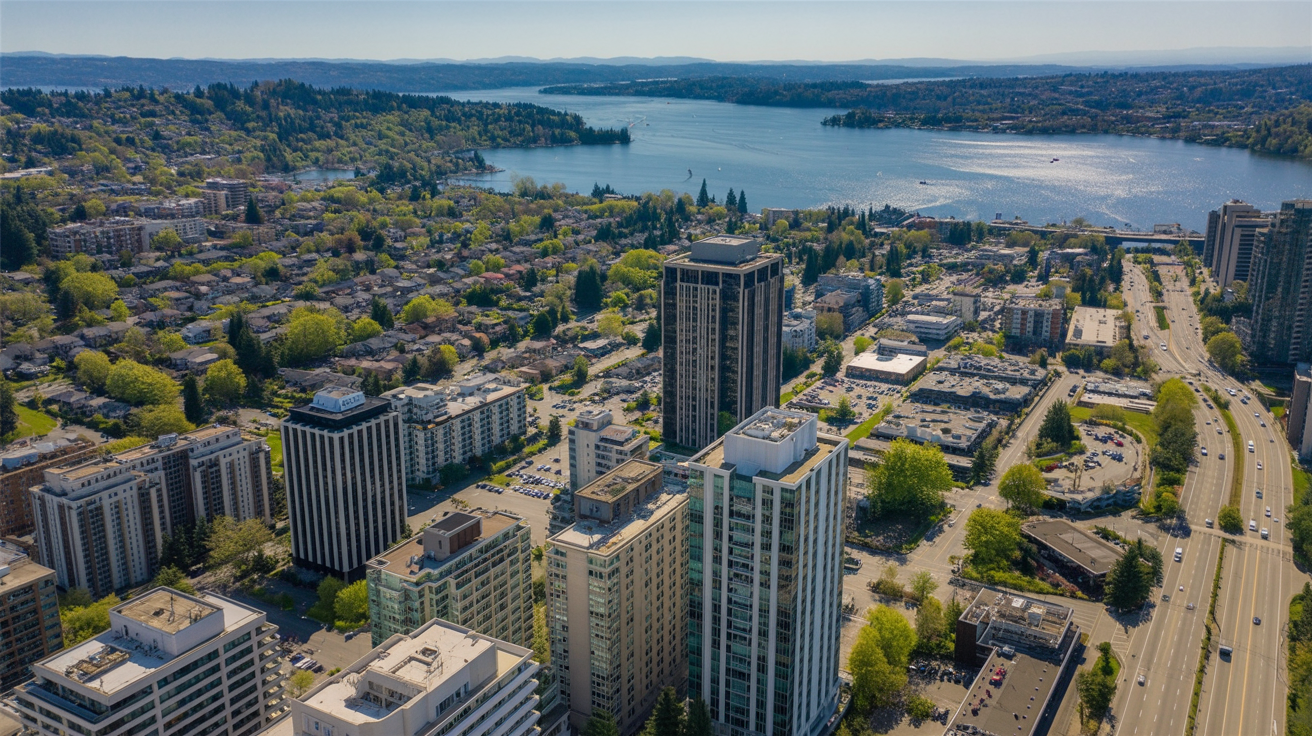
Tech Jobs in Seattle: Real Estate Guide for Technology Professionals 2026
Seattle's Tech Job Market: An Overview for 2026
Seattle has solidified its position as one of North America's premier technology hubs, rivaling Silicon Valley in talent density and innovation. As of January 2026, the Greater Seattle area hosts over 1,000 Google job openings alone, with 219 full-time positions spanning software engineering, AI/ML development, product management, and cloud infrastructure. When combined with Amazon's 75,000+ employees, Microsoft's 50,000+ workforce in the Puget Sound region, and hundreds of other tech companies, Seattle offers unparalleled career opportunities for technology professionals.
For tech workers considering Seattle, the decision extends beyond job opportunities to encompass real estate strategy, neighborhood selection, and long-term wealth building. With King County's median home price at $840,103 to $898,500 and Snohomish County offering more affordable options at $725,000 to $771,000, understanding how to leverage your tech compensation for real estate success is essential. This comprehensive guide helps tech professionals navigate Seattle's job market while making strategic real estate decisions.
Major Tech Employers and Their Real Estate Impact
Seattle's tech ecosystem is anchored by several major employers, each influencing real estate demand and pricing in specific geographic areas. Understanding these patterns helps tech professionals optimize their home search.
Amazon: Seattle's Largest Tech Employer
Amazon's headquarters in Seattle's South Lake Union and Denny Triangle neighborhoods has transformed the city's urban core. With over 75,000 employees in the Seattle area, Amazon's presence drives significant real estate demand.
Impact on Real Estate:
- South Lake Union: Median condo prices $650,000-$850,000. High-rise living with walking commute to Amazon offices
- Capitol Hill: Median $850,000 (condos), $1,100,000+ (homes). Light rail access to Amazon, urban lifestyle
- Fremont/Wallingford: Median $950,000-$1,200,000. Bike-friendly neighborhoods with 15-20 minute commute
- Ballard: Median $900,000-$1,150,000. Trendy area with growing Amazon employee population
Compensation Structure: Amazon's compensation includes base salary (capped around $160,000-$185,000 for most roles), signing bonuses (often $100,000+ for senior roles), and RSUs with back-loaded vesting (5% year 1, 15% year 2, 40% years 3-4). This structure means many Amazon employees wait until year 2-3 to purchase homes when RSU income increases significantly.
Microsoft: Eastside Tech Giant
Microsoft's Redmond campus employs over 50,000 people, making it the anchor of the Eastside tech corridor. The company's presence has shaped real estate development across King County's eastern communities.
Impact on Real Estate:
- Redmond: Median $1,150,000. Walking/biking distance to campus, excellent schools
- Bellevue: Median $1,250,000+. Urban amenities, Microsoft shuttle access, diverse dining
- Kirkland: Median $1,300,000 (homes), $600,000-$800,000 (condos). Waterfront lifestyle, 15-minute commute
- Sammamish: Median $1,200,000-$1,400,000. Top schools, family-oriented, 20-25 minute commute
Compensation Structure: Microsoft offers competitive base salaries, annual bonuses (10-20% of base), and RSUs with annual vesting. The more predictable vesting schedule (compared to Amazon) allows Microsoft employees to plan home purchases earlier in their tenure.
Google: Rapidly Expanding Presence
Google's Seattle-area operations represent the company's second-largest engineering office outside the Bay Area, with locations in Seattle, Kirkland, Bellevue, and Redmond. Over 1,000 current job openings signal continued growth.
Impact on Real Estate:
- Kirkland: Primary Google office location. Median $1,300,000 (homes), $600,000-$800,000 (condos)
- Fremont: Google office location. Median $950,000-$1,200,000. Urban-village feel
- Bothell: Median $900,000-$1,000,000. Value option with 15-20 minute commute to Kirkland
- Bellevue: Median $1,250,000+. Multi-employer access, urban lifestyle
Compensation Structure: Google's compensation includes competitive base salary, annual bonuses, and RSUs with quarterly vesting over four years (33% year 1, 33% year 2, 22% year 3, 12% year 4). The front-loaded vesting allows Google employees to purchase homes earlier than Amazon employees.
Meta (Facebook): Growing Eastside Presence
Meta's Bellevue office has grown significantly, with thousands of employees working on core Facebook products, Instagram, and Reality Labs projects.
Impact on Real Estate:
- Bellevue: Walking distance to office. Median $1,250,000+ (homes), $650,000-$850,000 (condos)
- Kirkland: 10-15 minute commute. Median $1,300,000 (homes), $600,000-$800,000 (condos)
- Redmond: 15-20 minute commute. Median $1,150,000. Family-friendly
Emerging Tech Employers
Beyond the "Big Four," Seattle hosts numerous high-growth tech companies offering competitive compensation and driving real estate demand:
- Salesforce: Major Seattle presence, competitive compensation
- Adobe: Fremont office, growing workforce
- Zillow: Seattle-based, real estate tech leader
- Expedia Group: Bellevue headquarters, travel tech
- T-Mobile: Bellevue headquarters, telecom/tech hybrid
- Tableau (Salesforce): Seattle office, data visualization
- F5 Networks: Seattle-based, networking/security
- Redfin: Seattle headquarters, real estate tech
Current Tech Job Market Trends (January 2026)
The Seattle tech job market in early 2026 shows strong fundamentals despite broader economic uncertainties. Understanding current trends helps tech professionals make informed career and real estate decisions.
Hiring Patterns and Demand
Key trends in Seattle's tech hiring landscape:
- AI/ML roles in high demand: Google alone has dozens of AI/ML positions open, with salaries ranging from $180,000-$350,000+ for senior roles
- Cloud infrastructure growth: AWS (Amazon), Azure (Microsoft), and Google Cloud drive demand for infrastructure engineers
- Product management premium: Senior PM roles command $200,000-$300,000+ total compensation
- Hybrid work normalization: Most companies offer 2-3 days remote, expanding viable housing locations
- Startup ecosystem strength: Seattle's startup scene continues growing, offering equity-heavy compensation
Compensation Benchmarks by Role
Understanding typical compensation helps determine housing affordability:
| Role | Experience Level | Total Compensation Range | Affordable Home Price (28% DTI) |
|---|---|---|---|
| Software Engineer | Entry (0-2 years) | $140,000-$180,000 | $500,000-$650,000 |
| Software Engineer | Mid (3-5 years) | $180,000-$250,000 | $650,000-$900,000 |
| Senior Software Engineer | Senior (6-10 years) | $250,000-$350,000 | $900,000-$1,250,000 |
| Staff/Principal Engineer | 10+ years | $350,000-$500,000+ | $1,250,000-$1,800,000+ |
| Product Manager | Mid-level | $180,000-$250,000 | $650,000-$900,000 |
| Senior Product Manager | Senior | $250,000-$350,000 | $900,000-$1,250,000 |
| Engineering Manager | Manager | $220,000-$320,000 | $800,000-$1,150,000 |
Note: Affordable home price assumes 20% down, 6% mortgage rate, and 28% debt-to-income ratio for housing costs.
Strategic Real Estate Planning for Tech Professionals
Tech professionals in Seattle have unique advantages when purchasing real estate, but maximizing these benefits requires strategic planning.
Leveraging Equity Compensation
RSUs and stock options provide powerful tools for real estate wealth building:
Down Payment Strategy:
- First vest approach: Use initial RSU vest (typically 12 months after start) for down payment. Allows earlier purchase but smaller down payment
- Two-year accumulation: Wait until year 2-3 when RSU income is higher. Larger down payment, better loan terms, but delayed entry
- Hybrid approach: Use signing bonus or savings for initial down payment, then use RSU vests for renovations or investment properties
Tax Optimization:
- Timing vests: If possible, time large RSU sales for January when YTD income is lower, reducing marginal tax rate
- Long-term capital gains: Hold vested RSUs for 1+ year before selling to qualify for lower long-term capital gains rates
- Estimated taxes: Make quarterly estimated tax payments when selling large RSU positions to avoid penalties
- Charitable donations: Donate appreciated RSUs to charity to avoid capital gains while getting deduction
Mortgage Qualification with Tech Compensation
Working with lenders who understand tech compensation is crucial:
What Lenders Look For:
- Two-year RSU history: Lenders average your RSU income over two years and count it as regular income
- Vesting schedule documentation: Provide your vesting schedule to show future RSU income
- Employment verification: Offer letter and employment verification from HR
- Tax returns: Two years of returns showing RSU income (if available)
- Bank statements: Showing vested RSU deposits and available funds for down payment
Maximizing Qualification Amount:
- Include all compensation: Ensure lender counts base salary, bonuses, and RSUs
- Pay down debts: Reduce credit card balances and car loans to improve debt-to-income ratio
- Avoid job changes: Stay with current employer through closing; job changes complicate qualification
- Document everything: Keep detailed records of all compensation components
Neighborhood Selection by Career Stage
Your ideal neighborhood depends on your career stage, family situation, and lifestyle preferences.
Early Career (0-3 Years Experience)
Budget: $500,000-$750,000
Early career tech professionals typically target condos or townhomes in urban or close-in suburban areas:
Best Options:
- Ballard condos: $500,000-$700,000. Urban lifestyle, walkable, good restaurants
- Capitol Hill condos: $550,000-$750,000. Light rail access, nightlife, diverse community
- Bellevue condos: $650,000-$850,000. Eastside access, urban amenities
- Bothell townhomes: $600,000-$750,000. More space, good value, growing amenities
Strategy: Focus on appreciation potential and flexibility. Condos in growing neighborhoods offer strong appreciation and easy exit when you're ready to upgrade. Prioritize proximity to work and lifestyle amenities over space.
Mid-Career (4-7 Years Experience)
Budget: $750,000-$1,100,000
Mid-career professionals often seek more space, better schools, or transition from condos to single-family homes:
Best Options:
- Bothell/Kenmore: $850,000-$1,000,000. Single-family homes, good schools, reasonable commutes
- West Seattle: $850,000-$1,050,000. More space, neighborhood feel, Seattle address
- Lynnwood/Edmonds: $750,000-$950,000. Snohomish County value, improving amenities
- Redmond (smaller homes): $900,000-$1,100,000. Excellent schools, tech community
Strategy: Balance current needs with 5-10 year plans. If children are in your future, prioritize school districts even if not immediately relevant. Consider commute flexibility with hybrid work arrangements.
Senior/Staff Level (8+ Years Experience)
Budget: $1,100,000-$1,800,000+
Senior tech professionals can access premium neighborhoods with top schools, larger homes, and desirable amenities:
Best Options:
- Redmond: $1,150,000-$1,500,000. Top schools, tech community, family-friendly
- Kirkland: $1,300,000-$1,800,000. Waterfront lifestyle, excellent schools, walkable downtown
- Bellevue: $1,250,000-$2,000,000+. Urban amenities, top schools, diverse community
- Sammamish: $1,200,000-$1,600,000. Highly rated schools, safe, family-oriented
- Mercer Island: $1,500,000-$2,500,000+. Top schools, island lifestyle, central location
Strategy: Focus on long-term value and lifestyle fit. These are often "forever homes" or long-term holds. Prioritize school quality, community, and appreciation potential. Consider investment property opportunities with your equity.
Current Market Conditions and Opportunities (January 2026)
Understanding current market dynamics helps tech professionals time their purchase and negotiate effectively.
King County Market Analysis
King County's market shows balanced conditions with opportunities for prepared buyers:
| Metric | Current Value | Implication for Tech Buyers |
|---|---|---|
| Median Price | $840,103-$898,500 | Stable pricing, modest appreciation expected |
| Inventory | +25.64% YoY | More choices, less competition |
| Days on Market | 24 days | Reasonable time for due diligence |
| Months Supply | 3.04 months | Approaching balanced market |
Opportunities:
- Homes priced below $675,000 seeing slower sales; negotiate aggressively
- Properties on market 30+ days open to price reductions or seller concessions
- Increased inventory allows thorough neighborhood research without pressure
- Sellers more willing to cover closing costs or offer credits
Snohomish County Value Proposition
Snohomish County offers significant savings for tech professionals with hybrid work flexibility:
| Metric | Current Value | Comparison to King County |
|---|---|---|
| Median Price | $725,000-$771,000 | $125,000-$175,000 less |
| Price per Sq Ft | $396 | $92 less per sq ft |
| Days on Market | 30-37 days | Slightly slower |
Best Snohomish County Options for Tech Workers:
- Bothell: Straddles King/Snohomish border. Best of both counties
- Lynnwood: Light rail coming 2024. Strong appreciation potential
- Edmonds: Waterfront community, charming downtown, ferry access
- Mukilteo: Boeing proximity, waterfront, good schools
- Lake Stevens: Family-friendly, newer construction, value pricing
Mortgage Rate Environment
Current rates (January 2026) are manageable for tech professionals:
- 30-year fixed: 5.5%-6.25%
- 15-year fixed: 4.625%-5.55%
- 7/1 ARM: 4.875%-6.0%
- Jumbo loans: 5.625%-6.0%
Rate Strategy: For tech professionals with strong income growth potential, consider 7/1 ARMs if you plan to refinance or upgrade within 7 years. The lower initial rate (often 0.5-1.0% below fixed rates) can save $300-$500 monthly.
Building Long-Term Wealth Through Real Estate
For tech professionals, real estate complements equity compensation to build substantial wealth.
Primary Residence as Wealth Builder
Your primary residence offers unique wealth-building advantages:
- Leverage: 20% down controls 100% of appreciation. On a $900,000 home, $180,000 down captures all gains
- Forced savings: Principal payments build equity automatically, creating discipline
- Tax benefits: Mortgage interest deduction (up to $750,000 loan), property tax deduction (up to $10,000 SALT cap)
- Capital gains exclusion: $250,000 ($500,000 married) of gains tax-free when selling primary residence after 2+ years
- Inflation hedge: Fixed mortgage payment while rents and incomes rise
Investment Property Strategy
Once established in your primary residence, consider investment properties:
Timing: After 2-3 years in primary residence when you have:
- Substantial equity from appreciation and principal paydown
- Higher income from RSU vesting and promotions
- Established credit history as homeowner
- Understanding of local real estate market
Best Investment Strategies for Tech Professionals:
- House hacking: Buy duplex or triplex, live in one unit, rent others. FHA loans allow 3.5% down on 1-4 units
- Condo rentals: Purchase condos in urban areas near tech employers. Strong rental demand from tech workers
- Upgrade and rent: When upgrading primary residence, keep previous home as rental if cash flow positive
- Out-of-state investments: Use Seattle equity to purchase cash-flowing properties in lower-cost markets
Diversification Strategy
Real estate provides crucial diversification from tech stock concentration:
- Different risk profile: Real estate and tech stocks don't correlate perfectly
- Tangible asset: Physical property provides psychological comfort during market volatility
- Income generation: Rental properties provide cash flow independent of stock performance
- Inflation protection: Real estate and rents typically rise with inflation
Common Mistakes Tech Professionals Make
Avoid these pitfalls when purchasing Seattle real estate:
Mistake 1: Waiting for Perfect Market Timing
Many tech professionals try to time the market perfectly, waiting for prices to drop or rates to fall. This often results in missed opportunities and continued rent payments.
Better Approach: If you plan to stay 5+ years, current conditions are reasonable. Focus on finding the right home at a fair price rather than perfect market timing.
Mistake 2: Overextending on First Purchase
High tech salaries tempt some to maximize their budget, leaving no cushion for unexpected expenses or income changes.
Better Approach: Target 25-28% of gross income for housing costs, not the 43% maximum lenders allow. Maintain emergency fund and continue investing in 401(k) and taxable accounts.
Mistake 3: Ignoring Total Cost of Ownership
Focusing only on mortgage payment without considering property taxes, insurance, HOA fees, and maintenance leads to budget strain.
Better Approach: Calculate total monthly cost including:
- Mortgage principal and interest
- Property taxes (~0.92% of value in King County)
- Homeowners insurance ($1,200-$2,000/year)
- HOA fees (if applicable)
- Maintenance reserve (1-2% of home value annually)
- Utilities (higher than apartment living)
Mistake 4: Neglecting School Districts
Even without children, school district quality significantly impacts resale value and appreciation.
Better Approach: Prioritize homes in top school districts (Lake Washington, Bellevue, Northshore, Issaquah) even if schools aren't immediately relevant. These areas maintain value better during downturns.
Mistake 5: Skipping Professional Representation
Some tech professionals try to navigate real estate alone, believing their analytical skills translate to real estate expertise.
Better Approach: Work with agents specializing in tech professionals who understand RSU compensation, relocation packages, and tech-friendly neighborhoods. Their expertise saves money and stress.
Why Choose Odigo Club for Your Tech Career Real Estate Journey
At Odigo Club, we specialize in serving technology professionals throughout their Seattle real estate journey. Our agents understand the unique aspects of tech compensation, career trajectories, and lifestyle priorities that matter to software engineers, product managers, data scientists, and other tech workers.
We provide:
- Tech compensation expertise: Deep understanding of RSUs, stock options, and how to maximize mortgage qualification
- Employer-specific knowledge: Familiarity with Amazon, Microsoft, Google, Meta, and other tech company relocation packages and benefits
- Neighborhood insights: Data-driven analysis of commute times, school districts, appreciation potential, and lifestyle fit
- Career stage guidance: Tailored advice for early career, mid-career, and senior tech professionals
- Investment strategy: Guidance on building real estate wealth alongside your equity compensation
- Long-term partnership: Support from first condo to investment properties and beyond
Ready to leverage your tech career for real estate success? Contact Odigo Club today to connect with an agent who specializes in helping technology professionals find their perfect home in the Greater Seattle area. Let's turn your tech compensation into long-term real estate wealth.
About the Author

Peter Kim
Peter Kim is the owner of Odigo Real Estate Club, a leading real estate agency in the Greater Seattle area that specializes in residential, commercial, and luxury properties. With over 25 years of combined experience and a team of highly skilled agents, Peter brings a wealth of knowledge and expertise to the real estate space.


